
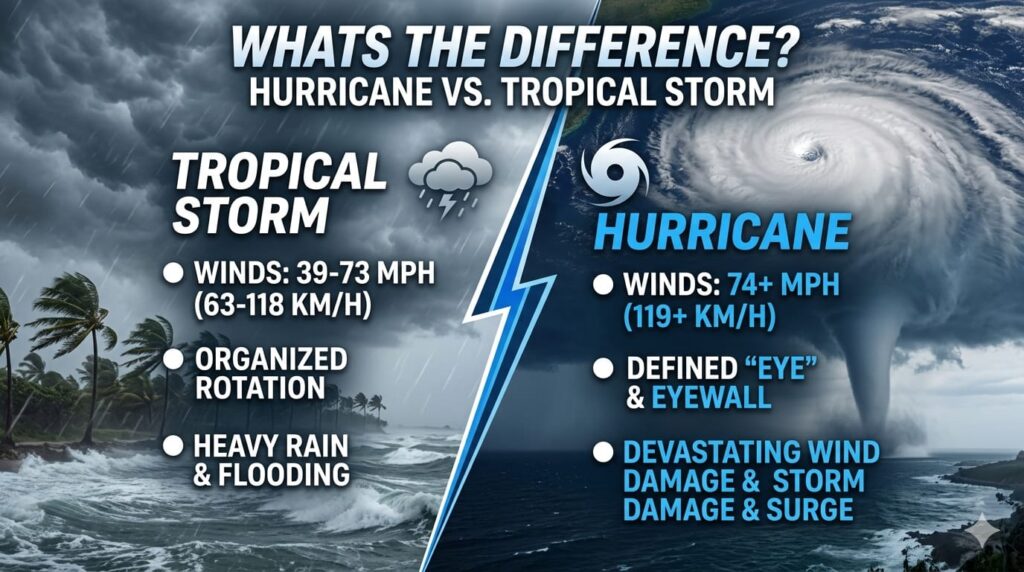

To the untrained eye, satellite images of these spinning weather systems look identical. However, the fundamental difference comes down to one single metric : maximum sustained wind speed.
As a tropical system gathers energy over warm ocean waters, it climbs a meteorological ladder based on its intensity :
• Tropical Depression : The storm’s infancy. It is a disorganized group of thunderstorms with winds under 39 mph.
• Tropical Storm : The storm becomes organized and is officially given a name. Winds range from 39 to 73 mph.
• Hurricane : The storm reaches peak intensity, often developing a calm “eye” at its center. Winds hit 74 mph or higher.
Core Differences
Wind Speed Threshold : A tropical storm packs winds between 39 and 73 mph. The moment those sustained winds hit 74 mph, it is officially upgraded to a hurricane.
Storm Structure : Tropical storms are less organized and rarely have a visible center. Hurricanes feature a highly organized structure, including a distinct, calm “eye” surrounded by a violent “eyewall” of intense thunderstorms.
Classification Scale : While a tropical storm is simply classified by its name, hurricanes are further broken down into Categories 1 through 5 on the Saffir-Simpson Scale based on their destructive potential. Wind Damage
Potential : Tropical storms generally cause minor to moderate damage, such as snapped tree branches and localized power outages. Hurricanes cause widespread, structural damage, uproot major trees, and can render areas uninhabitable for weeks.
The Golden Rule: Don’t Underestimate the Storm
It is a common mistake to downplay a tropical storm just because it hasn’t become a hurricane. Water—not wind—is often the deadliest part of these systems. A slow-moving tropical storm can drop feet of rain, leading to catastrophic inland flooding and dangerous storm surges that rival a hurricane. No matter the official title, both systems demand serious preparation.