
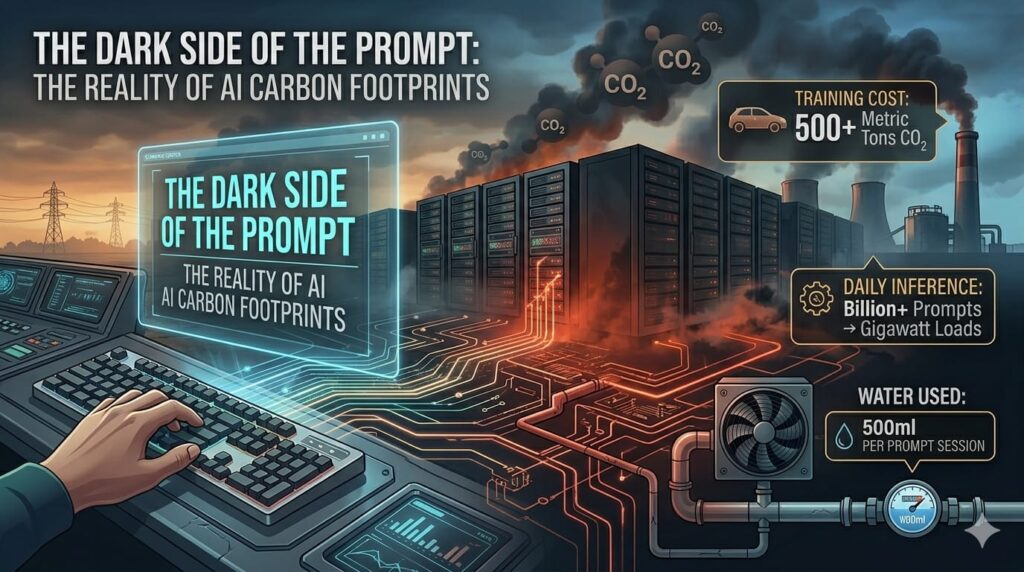

We’ve all been there: staring at a blinking cursor, only to have a Large Language Model (LLM) spin up a 1,000-word essay, a complex Python script, or a photorealistic image in seconds. It feels like magic. But in 2026, as AI becomes the backbone of our digital lives, the “magic” is starting to show its receipt. The reality? Every prompt has a physical cost. Behind the sleek interface lies a sprawling infrastructure of humming servers, massive cooling fans, and a thirst for resources that is reshaping our planet’s energy map.
1. The Hidden Cost of “Learning”
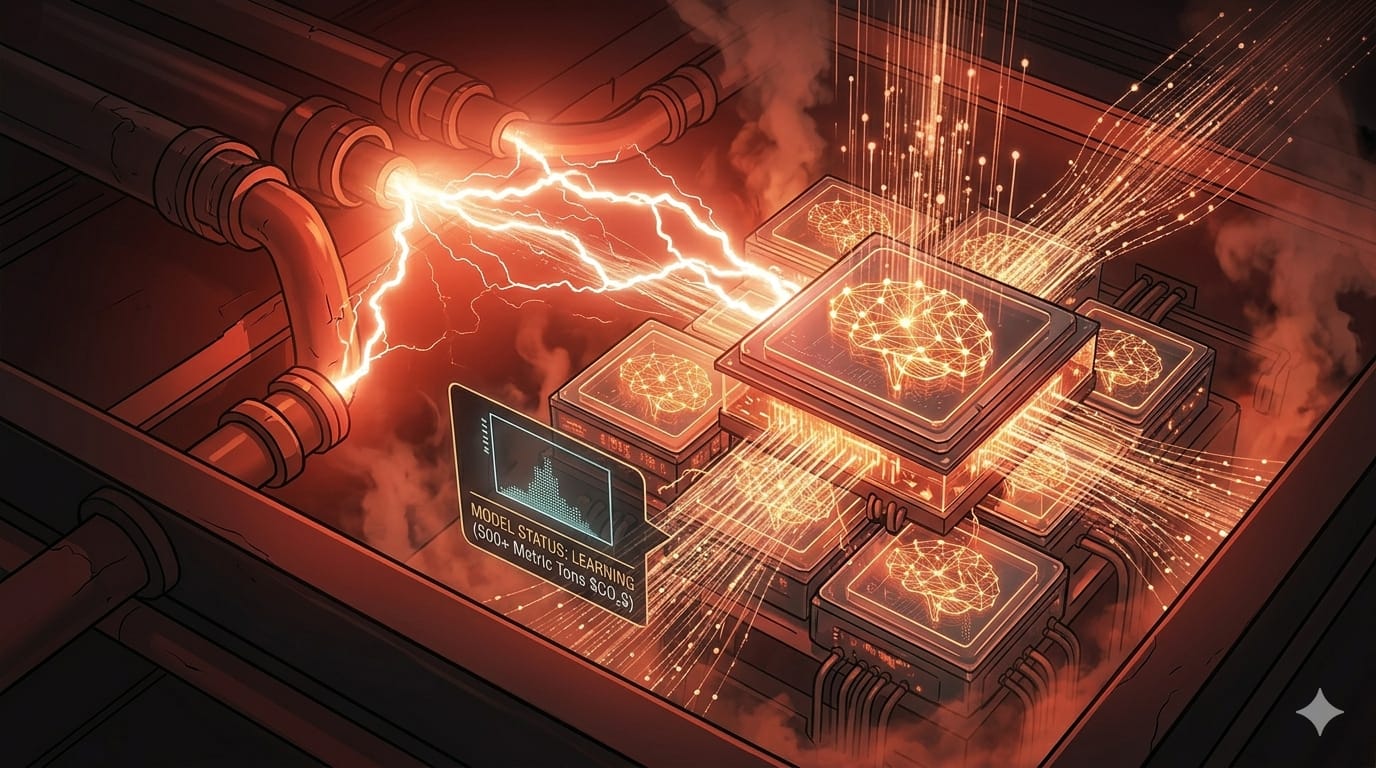
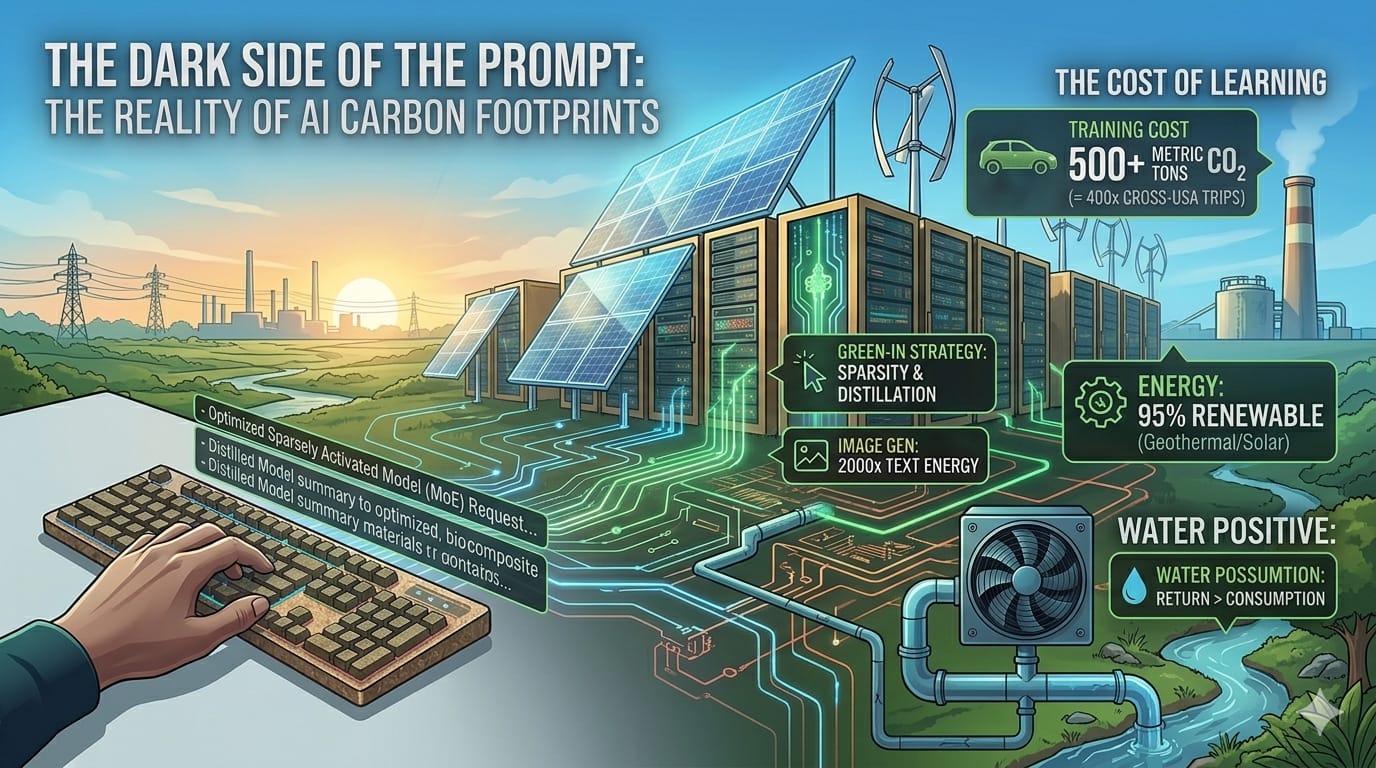
Before an AI can answer your first question, it has to go to “school.” This is the training phase, and it is spectacularly energy-intensive. Training a single frontier model can consume upwards of 1,200 Megawatt-hours (MWh) of electricity—enough to power 120 average homes for an entire year. The carbon emissions from training just one of these giants can exceed 500 metric tons of CO2.
2. The “Death by a Thousand Prompts”
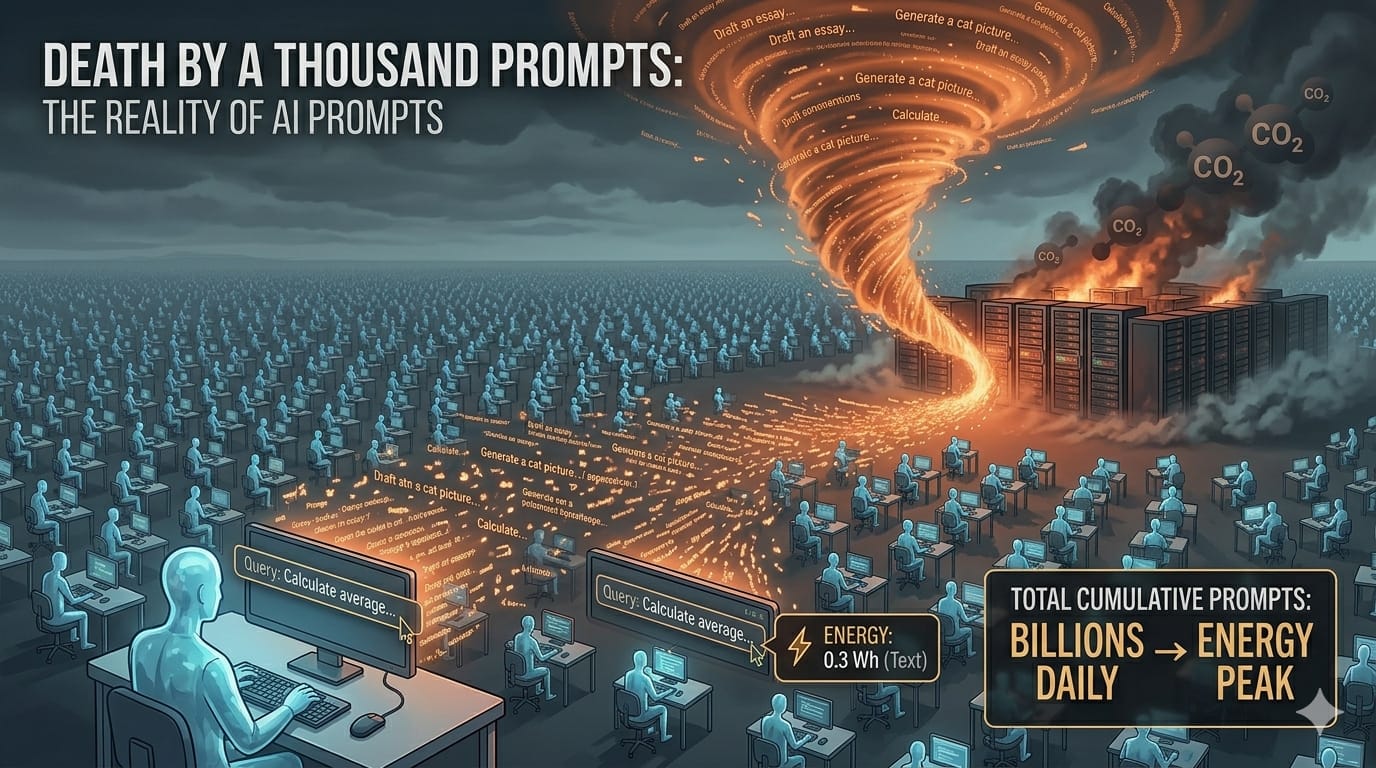
While training gets the headlines, inference—the act of the AI generating a response for you—is where the long-term impact hides. In 2026, with billions of prompts processed daily, the cumulative effect is staggering.
Simple Text Query: Uses about 0.3 Wh per prompt.
Image Generation: Uses as much energy as charging your smartphone halfway.
Video Generation: Can use 2,000 times more energy than a simple text response.
3. The Thirst of the Machine
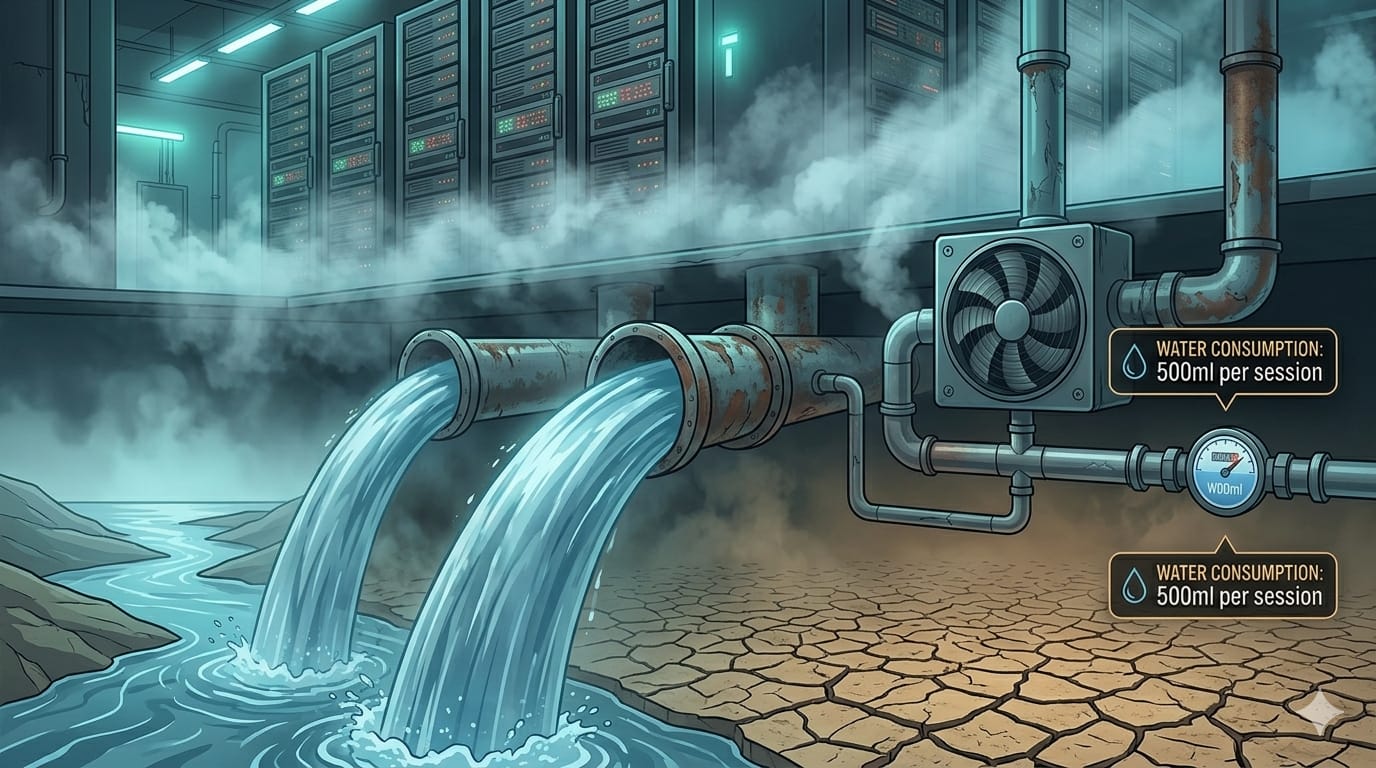
It isn’t just about electricity; AI is incredibly thirsty. Data centers generate immense heat, and to keep those high-end GPUs from melting, they rely on massive cooling systems. A typical conversation of 20-50 exchanges can “drink” about 500ml of water. Globally, data center water consumption is straining local municipalities.
4. The Path to “Green AI”
Is the situation hopeless? Not necessarily. The industry is pivoting toward “Green-in AI”— sustainable infrastructure designed to mitigate these costs through renewable energy and “Sparsely Activated Models” (MoE) that use less brainpower for simple tasks, significantly reducing the environmental footprint.
Conclusion: A Reality Check
We don’t need to stop using AI, but we do need to stop treating it as “weightless” software. Every time we hit “Enter,” we pull a lever on a physical power grid. The “Dark Side” of the prompt isn’t that the technology is bad—it’s that its convenience often masks its consequence.
Want to dive deeper into the world of science and AI https://cbseaiscience.com/2026/05/07/beyond-lithium-is-sodium-ion-the-green-battery-savior/