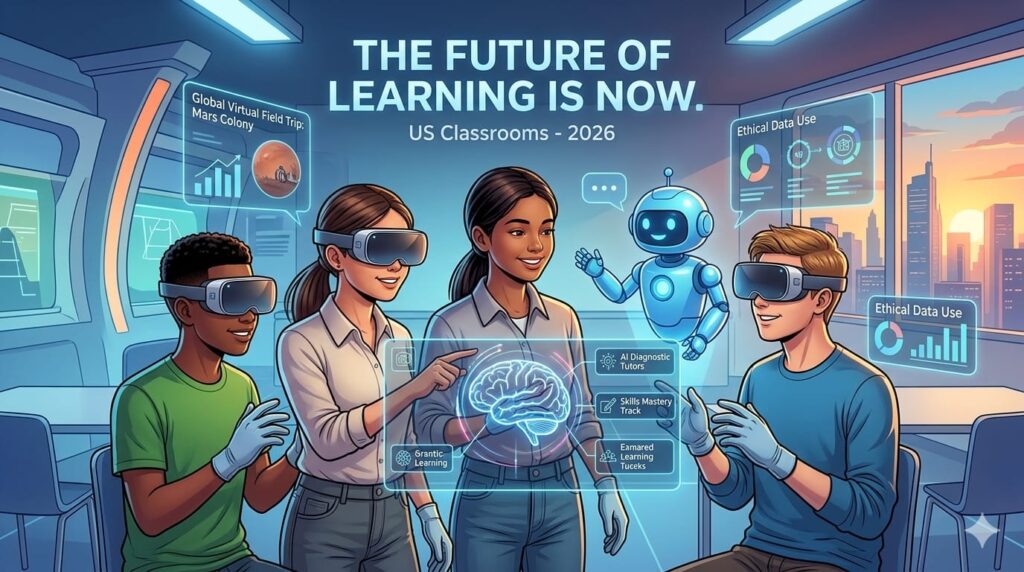

The integration of Artificial Intelligence (AI) into the American classroom is no longer a futuristic concept—it is a reality happening today. From elementary schools to university campuses, AI is fundamentally changing how students learn and how educators teach.
Personalized Learning at Scale
One of the most significant impacts of AI is its ability to tailor educational content to the individual. Every student learns at a different pace, and traditional “one-size-fits-all” teaching often leaves some behind while others get bored.
Adaptive Platforms: AI-driven tools analyze a student’s performance in real-time.
Targeted Support: Systems allow for immediate intervention based on data.
Empowering Educators, Not Replacing Them
AI serves as a powerful teaching assistant, automating repetitive administrative tasks and giving teachers more time for mentorship.
Enhanced Accessibility and Inclusivity
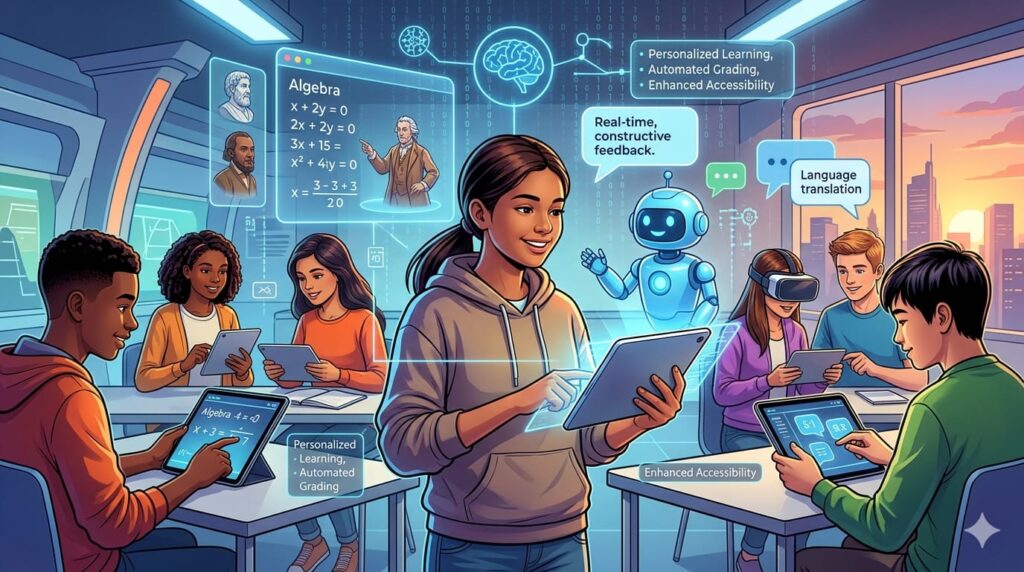
AI provides vital support for students with disabilities, including real-time speech-to-text, translation services, and text-to-speech tools.
Also Read – https://cbseaiscience.com/2026/05/08/brain-cleaning-t…penn-state-study/
Navigating the Challenges
The shift toward an AI-integrated classroom requires addressing data privacy, academic integrity, and the digital divide to ensure equity for all students.
Conclusion
The goal of AI in education is to create a more responsive and effective learning environment by combining human empathy with the efficiency of machine intelligence.