

Introduction –
In the world of infectious diseases, we often focus on viruses that spread from person to person. However, some of the most serious threats come from the environment around us. One such example is the Hantavirus—a rare but potentially deadly respiratory threat that bridges the gap between wildlife and human health.
What Exactly is Hantavirus?
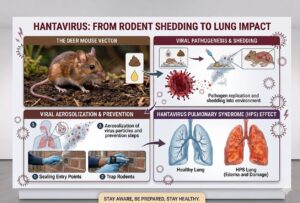
Hantaviruses are a family of viruses spread mainly by rodents. While the virus doesn’t make the rodents sick, it can cause severe, sometimes fatal, illnesses in humans. Depending on the region, these viruses usually manifest in two ways: •
• Hantavirus Pulmonary Syndrome (HPS): Common in the Americas, this primarily attacks the lungs.
• Hemorrhagic Fever with Renal Syndrome (HFRS): More common in Europe and Asia, this primarily affects the kidneys.
How the Virus Finds Us: The Transmission Cycle
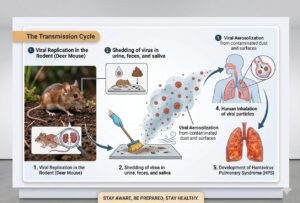
The most important thing to understand about Hantavirus is that it is not (usually) airborne in the way the flu is. Instead, it is transmitted through “viral shedding“.
- The Hosts: Rodents like deer mice, cotton rats, and rice rats carry the virus in their urine, droppings, and saliva.
- Aerosolization : When rodent waste is disturbed—for example, by sweeping a dusty garage or cleaning an old shed—tiny viral particles become airborne.
- Inhalation: Humans breathe in these contaminated particles. This is the most common route of infection.
Direct Contact: Touching contaminated materials and then touching your nose or mouth, or very rarely, through a rodent bite.
Recognizing the Warning Signs
Early symptoms of Hantavirus can easily be mistaken for the common flu, which is why awareness is so critical.
Early Symptoms (1–5 weeks after exposure):
• High fever and chills
• Severe muscle aches (especially in the thighs, hips, and back)
• Fatigue and dizziness
• Digestive issues (nausea, vomiting, or stomach pain)
Late Symptoms (4–10 days after the initial phase):
The hallmark of HPS is the sudden onset of shortness of breath. As the lungs fill with fluid, breathing becomes incredibly difficult. If you experience these symptoms after being in an area with rodent activity, seek emergency medical care immediately.
Prevention: Your Best Defense
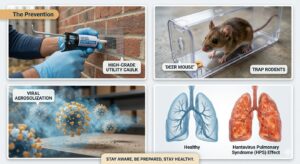
Since there is no specific vaccine or cure for Hantavirus, prevention is the most effective tool we have. The goal is to “Seal Up, Trap Up, and Clean Up.”
• Seal Entry Points: Use steel wool or caulk to plug holes in your home or workspace that are larger than a pencil eraser.
• Safe Cleaning: Never sweep or vacuum rodent droppings, as this flings the virus into the air. Use a bleach solution to wet the area first.
• Outdoor Safety: When camping or hiking, avoid sleeping on bare ground near woodpiles or areas where rodents might nest.
Conclusion
While the risk of contracting Hantavirus is statistically low, the severity of the illness makes it a “high-stakes” virus. By staying informed about rodent activity in your area and practicing smart hygiene, you can enjoy the outdoors and your home with peace of mind.