
The word “Ebola” instantly triggers panic. With global public health agencies closely monitoring rare strain outbreaks, headlines are screaming again.
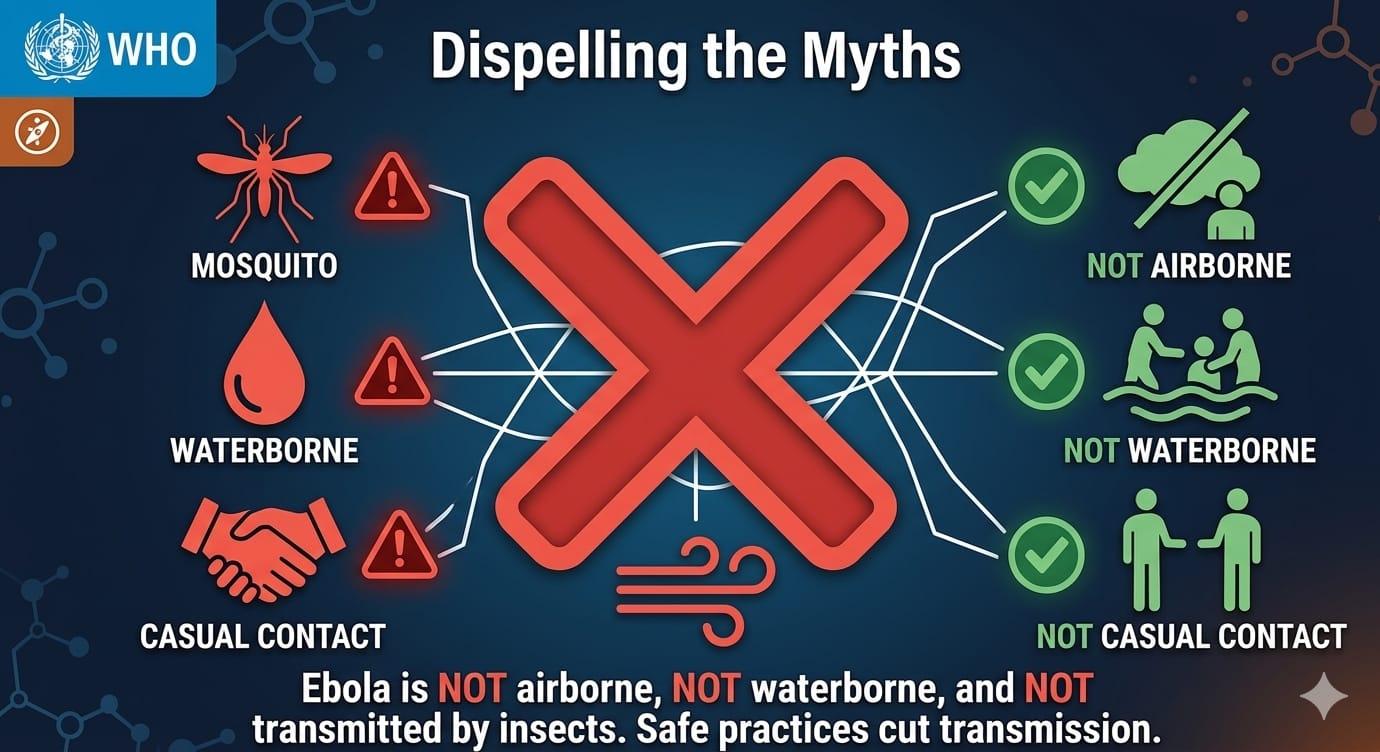
But here is the reality check: you cannot catch Ebola the way you catch a cold. It doesn’t travel through a cough, a sneeze, or a crowded room.
Understanding exactly how Ebola moves is the best tool to replace fear with facts. Here is the blunt breakdown of how the virus spreads—and how it doesn’t.
The Wildlife “Spillover”
Ebola hides in nature. Fruit bats are the virus’s natural reservoir, carrying it without getting sick. The trouble starts when the virus jumps from bats to other wildlife—like monkeys, chimpanzees, or forest antelopes.
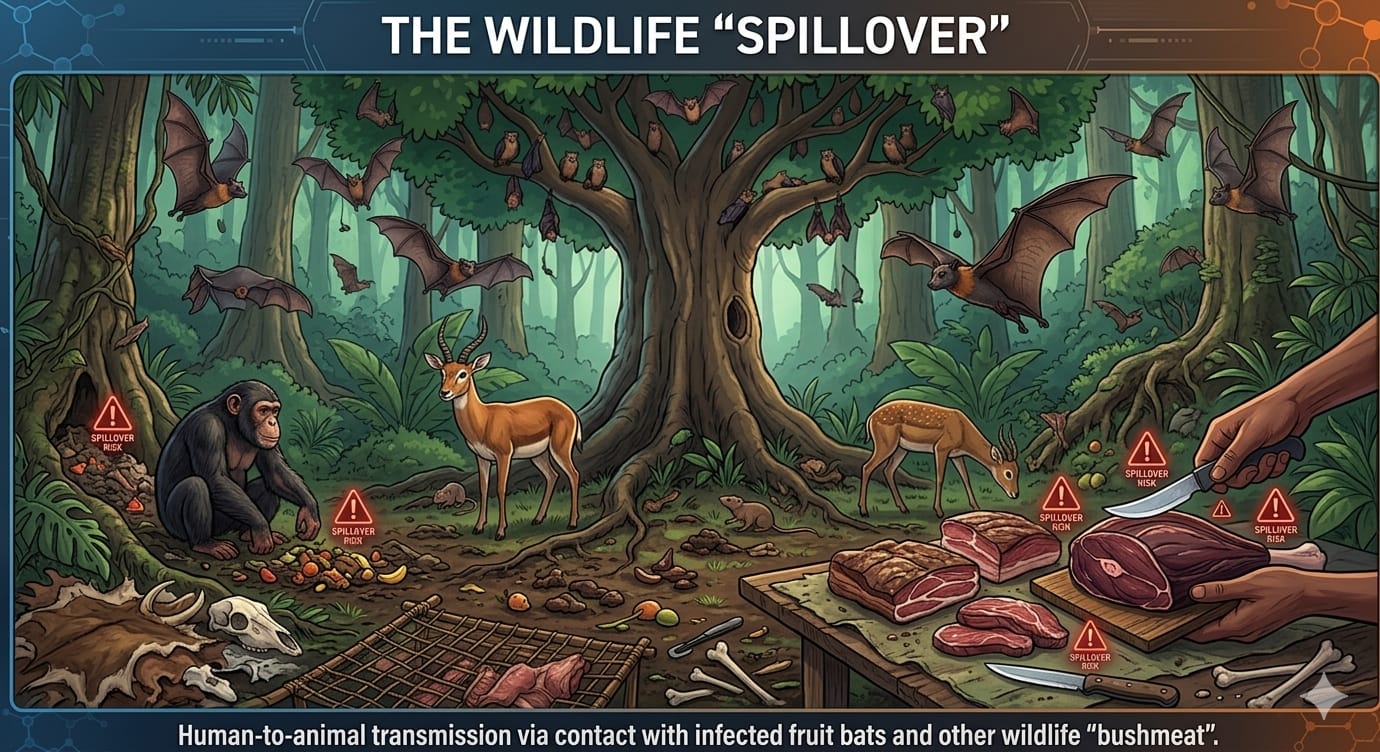
Humans catch it through a spillover event: directly handling, butchering, or eating undercooked “bushmeat” from these infected animals.
Human-to-Human: Fluid, Not Air
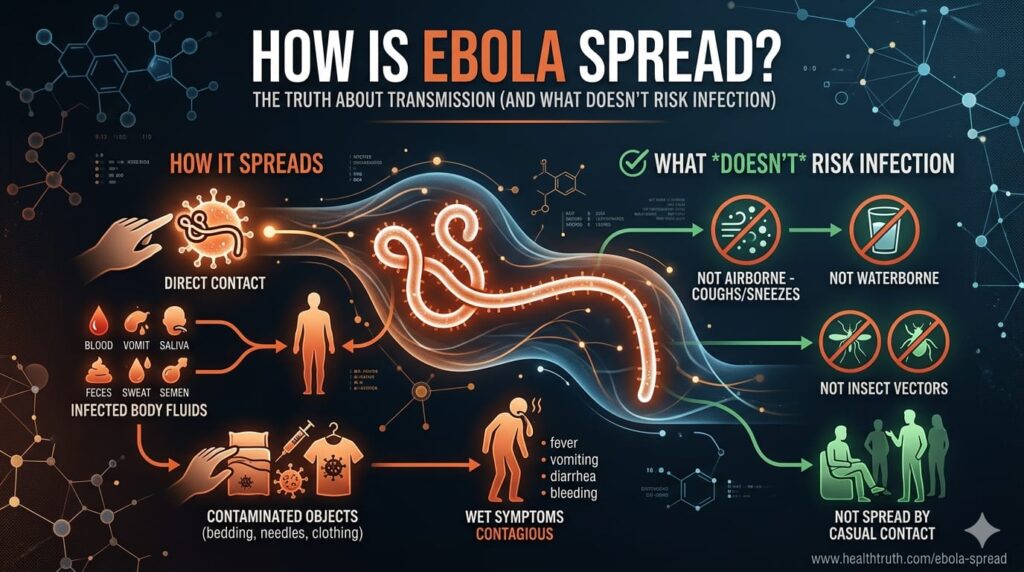
Once inside a human, Ebola is not airborne, not waterborne, and cannot be spread by mosquitoes. Instead, it relies entirely on direct contact. To get infected, the virus must pass through broken skin or your mucous membranes (eyes, nose, mouth) via:
Infected Fluids: Blood, vomit, feces, sweat, saliva, or semen.
Contaminated Surfaces: Clothing, bedding, or medical needles soaked in these fluids.
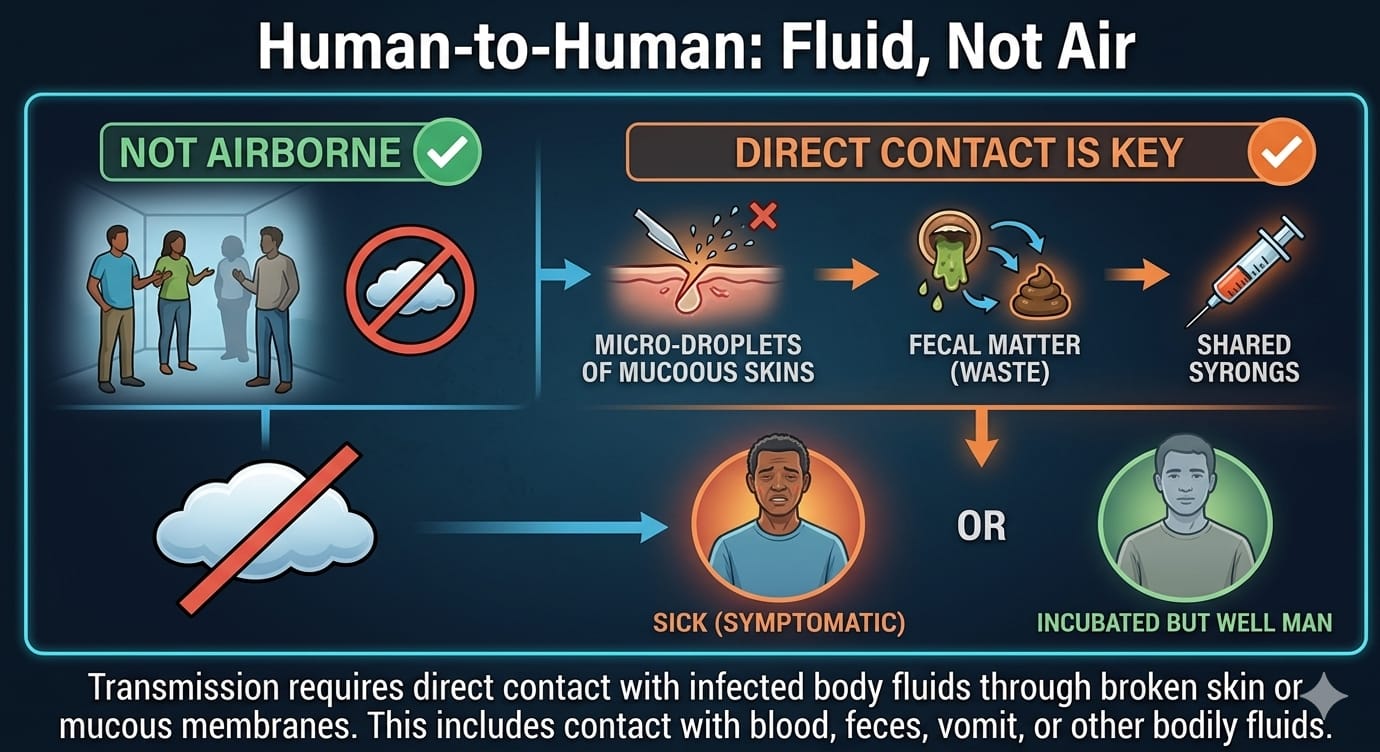
The Golden Rule: A person with Ebola is not contagious until they show symptoms. You cannot catch it from someone during the 2-to-21-day incubation period while they still feel fine. They only become dangerous to others once “wet symptoms” (fever, vomiting, diarrhea, and bleeding) actively begin.
Who is Actually at Risk?
Because it requires direct physical contact, Ebola outbreaks don’t spread randomly. They ruthlessly target three specific groups:
- Healthcare Workers: Doctors and nurses treating patients without strict protective gear.
- Family Caregivers: Loved ones providing intense, hands-on care at home.
- Mourners: People participating in traditional burial rituals that involve washing or touching the deceased body, where viral loads are at their absolute highest.