
The Wonder of Science: Understanding the World Around Us
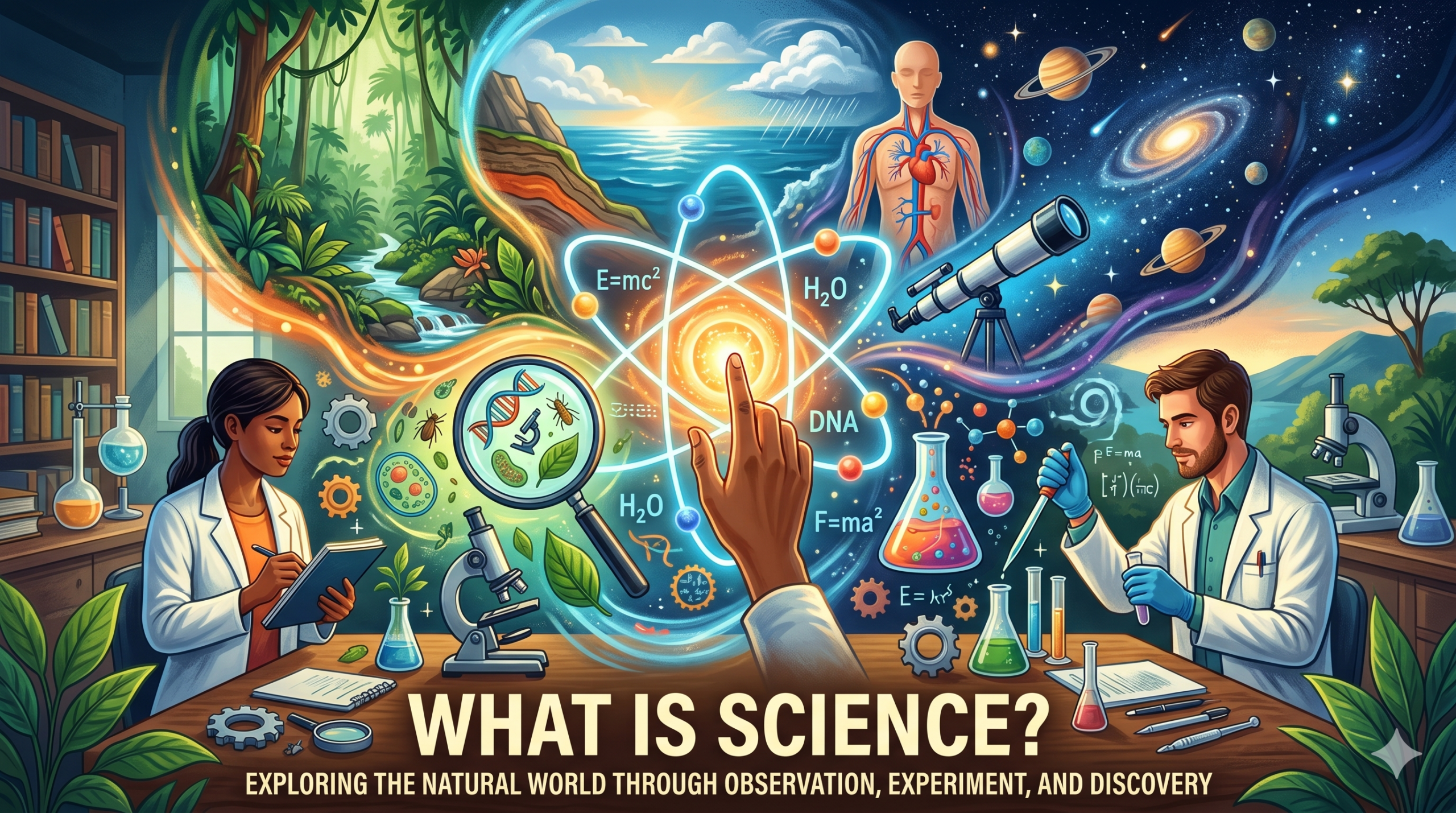
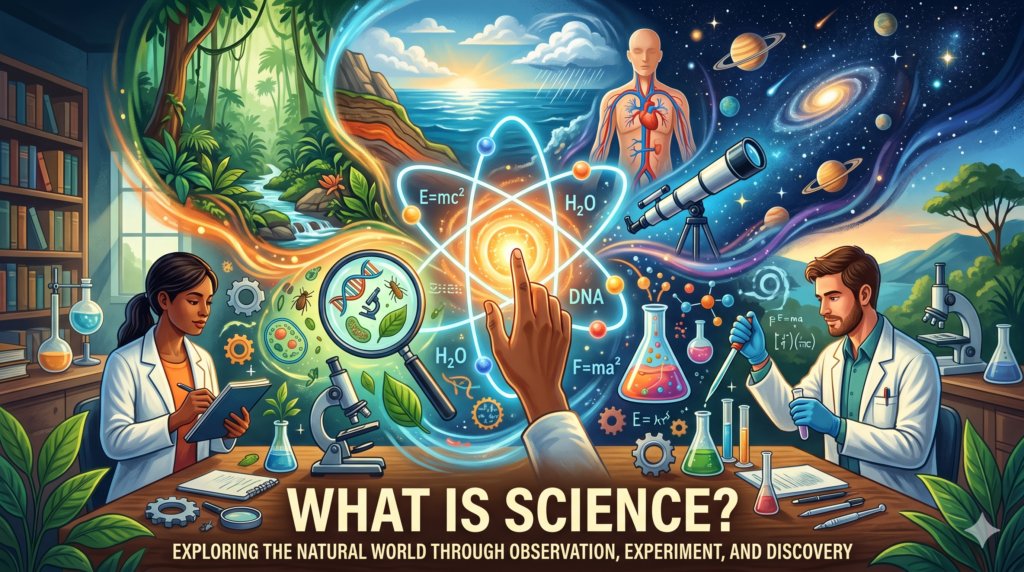
Science is often portrayed as a collection of dusty textbooks or complex equations on a chalkboard. In reality, science is a dynamic process—a systematic way of exploring, questioning, and understanding the universe. It is the curiosity that drives us to ask “Why?” and the method we use to find the answer.
What is Science?
At its core, science is the pursuit of knowledge. It involves observing the natural world, forming hypotheses, conducting experiments, and drawing conclusions based on evidence. It isn’t just a body of facts; it is a methodology designed to minimize bias and ensure that our understanding of reality is as accurate as possible.
Science in Our Daily Life
We are so surrounded by the fruits of scientific labor that we often take them for granted. From the moment you wake up to the time you go to sleep, science is at work:
- Technology & Communication: The smartphone in your pocket relies on electromagnetism and quantum mechanics. The internet depends on fiber optics and satellite technology.
- Health & Medicine: From common painkillers to life-saving vaccines and advanced surgical robots, medical science has doubled the human life expectancy over the last few centuries.
- Food & Nutrition: Science helps us understand pasteurization, refrigeration, and the nutritional value of what we eat, ensuring our food is safe and balanced.
- Energy: Whether it’s the electricity powering your home or the fuel in your car, physics and chemistry dictate how we harness and use energy.
The Major Branches of Science
To make the vastness of the universe easier to study, science is generally divided into three main categories:
1. Physical Sciences
These explore the laws of the inorganic world.
- Physics: The study of matter, energy, motion, and force. It explains everything from the orbit of planets to the behavior of subatomic particles.
- Chemistry: The study of substances and how they interact, combine, and change. It is often called the “central science” because it connects physics with biology.
- Astronomy: The study of celestial objects and the universe as a whole.
2. Life Sciences (Biology)
These focus on living organisms and their relationship with the environment.
- Zoology & Botany: The study of animals and plants, respectively.
- Genetics: The study of DNA and how traits are passed down through generations.
- Ecology: The study of how organisms interact with one another and their physical surroundings.
3. Earth Sciences
These focus on the physical constitution of the Earth and its atmosphere.
- Geology: The study of the solid Earth, the rocks of which it is composed, and the processes by which they change.
- Meteorology: The study of the atmosphere and weather patterns.
- Oceanography: The study of the physical and biological properties of the seas.
Why Science Matters
Science is the most powerful tool we have for solving global challenges. Whether it is tackling climate change, curing diseases, or exploring deep space, science provides the roadmap. By staying curious and applying scientific thinking, we can continue to innovate and improve the quality of life for everyone on Earth.