
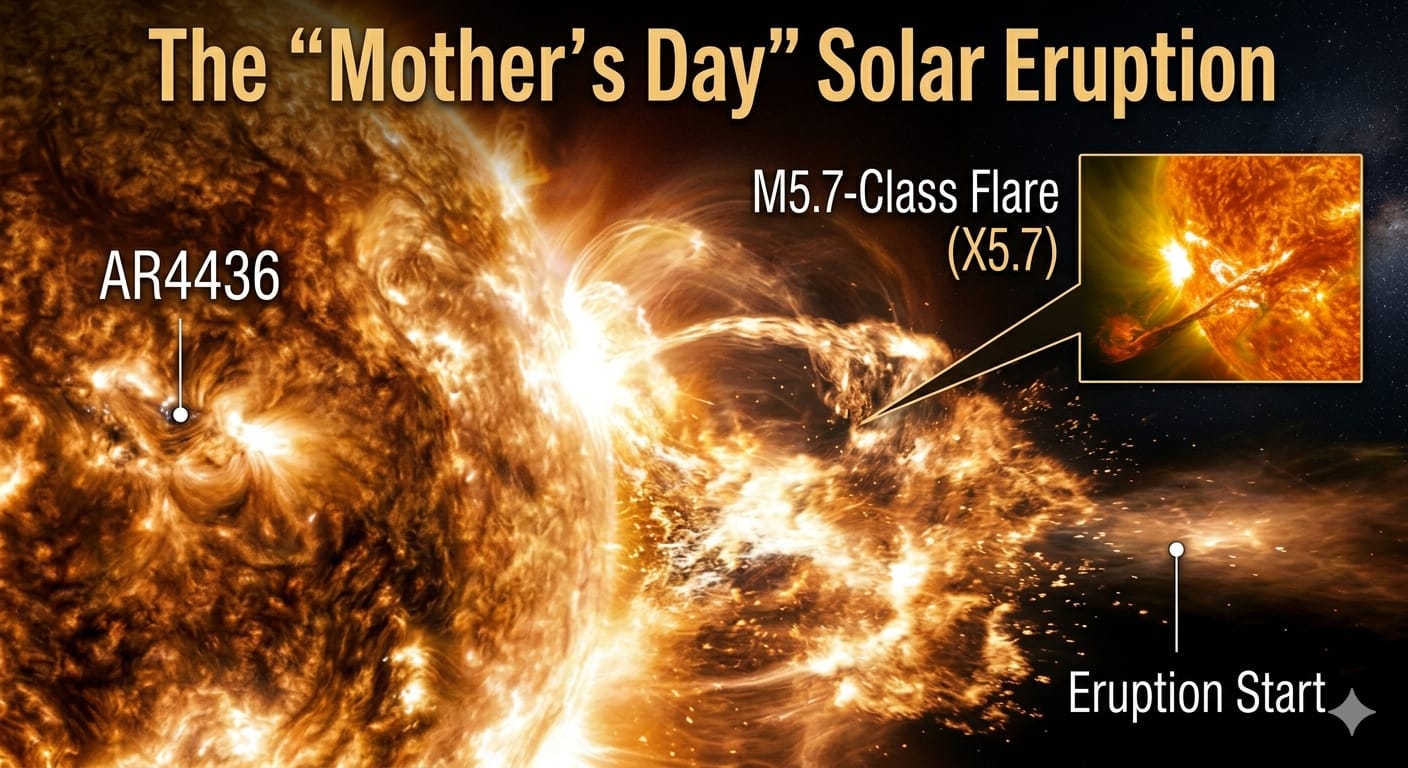
The “Mother’s Day” Solar Eruption
The Sun has entered a phase of intense activity, recently producing a massive eruption from sunspot region AR4436. This event, occurring on May 10, unleashed a powerful M 5.7-class solar flare. While the initial burst of light caused radio blackouts over the Atlantic, the primary concern for Earth is the massive Coronal Mass Ejection (CME) trailing behind it, which is currently traveling through space.
Understanding Coronal Mass Ejections (CMEs)
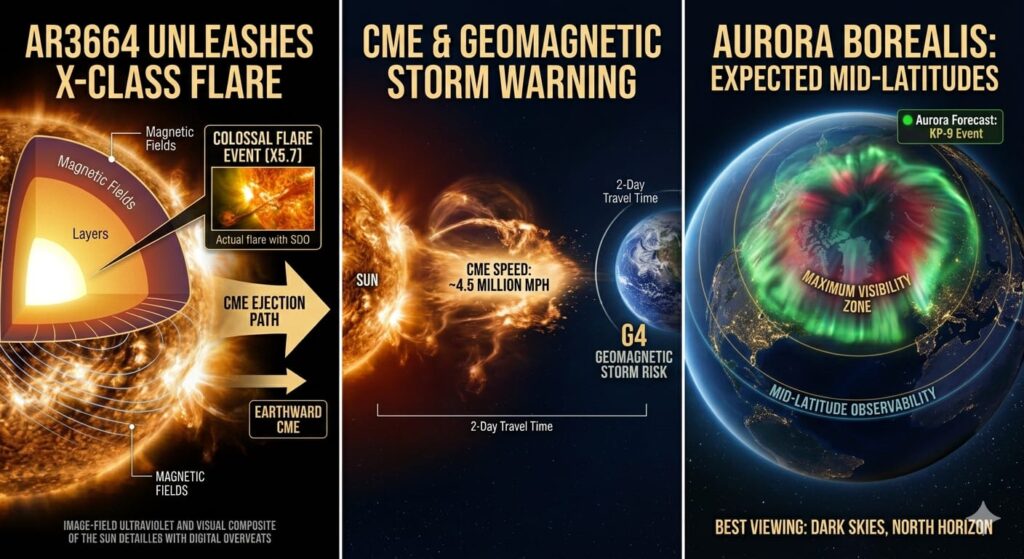
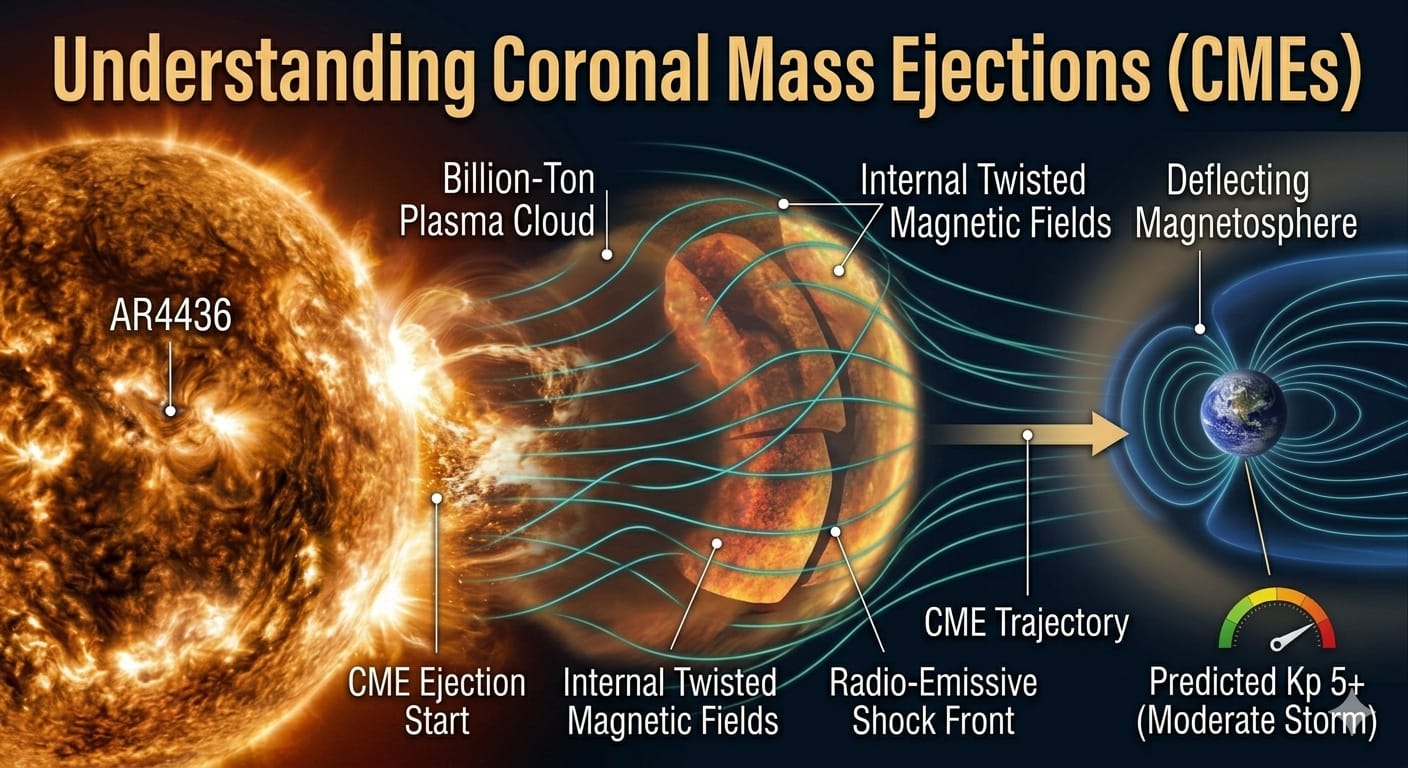
A Coronal Mass Ejection is a colossal bubble consisting of a billion tons of solar plasma and intense magnetic fields. Unlike the solar flare itself, which reaches Earth in minutes, the CME travels slower, taking days to arrive. When this solar “cloud” interacts with Earth’s magnetosphere, it triggers geomagnetic storms that produce the vibrant colors of the Aurora Borealis .
Space Weather Forecast & Storm Magnitude
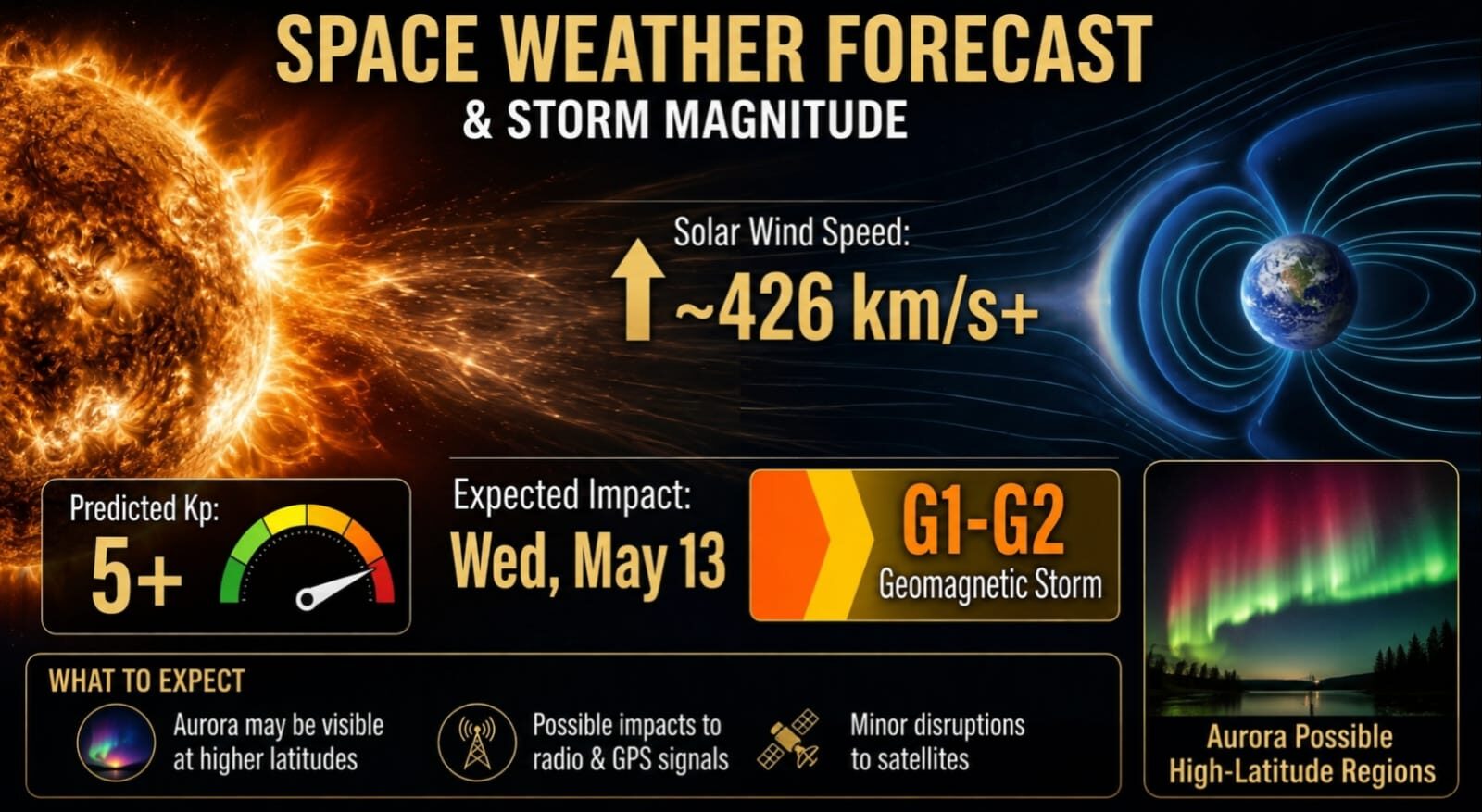
Meteorologists are bracing for a geomagnetic impact starting Wednesday, May 13, through Thursday, May 14. The storm is currently forecasted to reach G1 (Minor) to G2 (Moderate) levels. Key indicators include:
Solar Wind Speed : Currently rising near 426 km/sec .
Kp – Index: Models are targeting a level of 5 or higher , which indicates a significant chance for aurora visibility.
Prime Viewing Locations
Due to the predicted strength of the storm, the “auroral oval” is expected to expand toward the equator.
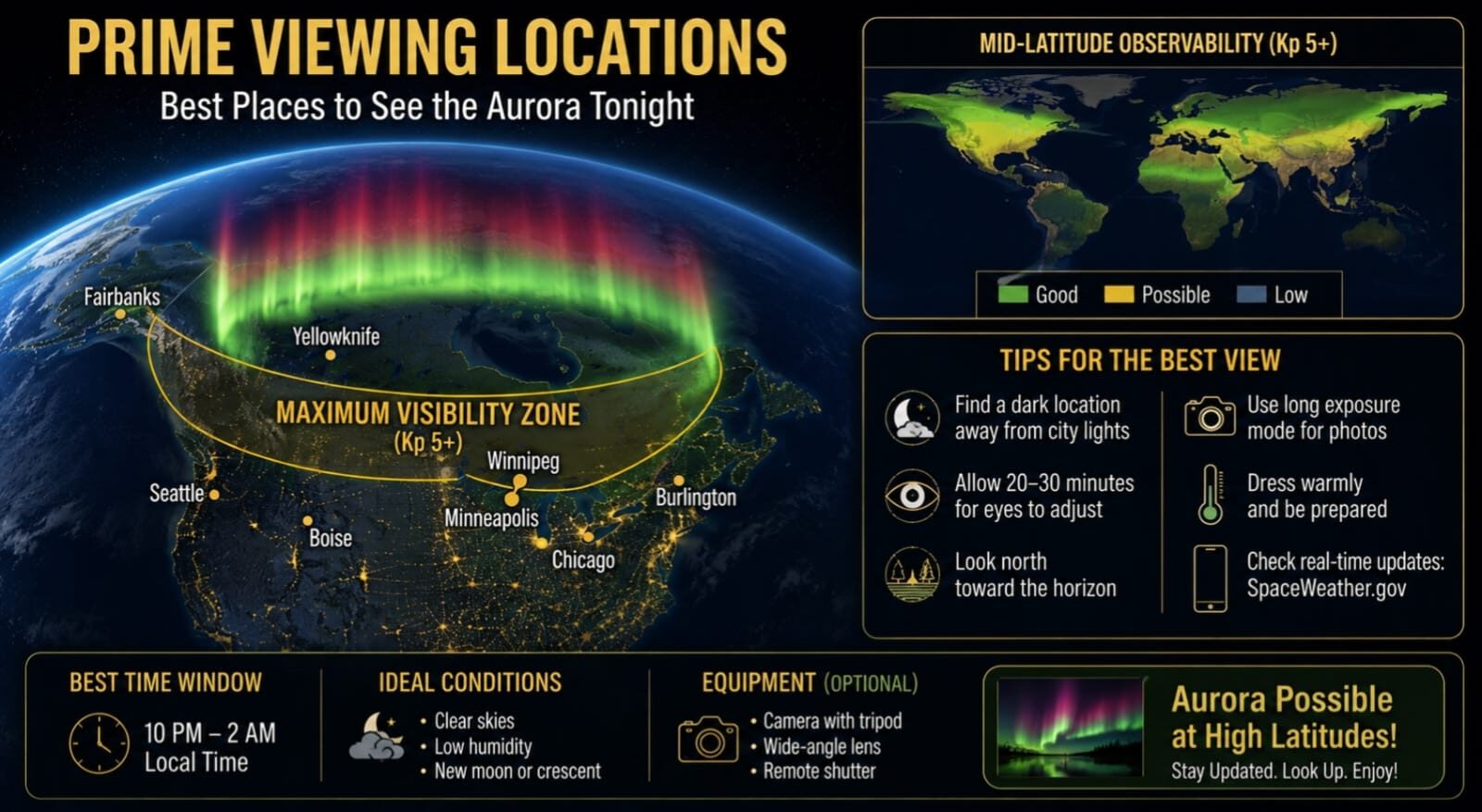
North America: High probability of sightings in Washington, Montana, North Dakota, Minnesota, and potentially as far south as Iowa or Pennsylvania .
Europe: Strong chances are expected for Scotland and Northern England, with horizon glows possible as far south as Manchester.
Canada: Most regions are expected to have excellent visibility, provided the weather remains clear.
Strategy and Tips for Aurora Hunting
To maximize your chances of seeing the lights, follow these expert recommendations:
Escape Urban Light: Find a dark-sky location away from city lights with a clear view of the northern horizon.
Watch the Clock: Peak activity is typically expected between 10:00 PM and 2:00 AM local time.
Use Camera Technology: Smartphone cameras using “Night Mode” can often capture the green and red spectrums of the aurora even when they are not yet visible to the naked eyes.